
Branding, Web, Interiors
Turning a promise of home into a brand young people can actually trust.

( 00-01 )
ABOUT THE PROJECT
Youth homelessness rarely gets talked about in specifics. Oasis Youth Care supports young people aged thirteen to twenty-five, particularly those aging out of institutional care or fleeing crisis. Its Foyer Model connects housing, empowerment, and mentorship through three phases: Heal, Grow, Thrive.
We built the identity around the organization’s own language for its philosophy, the Ubuntu Spirit, and the belief that showing up for one young person strengthens the whole community. That meant a warm, human visual language rather than the colder, clinical look many social service brands default to. The tagline: More than housing. Building futures, became the test for every design decision: does this feel like an institution processing a case, or a home helping someone rebuild?

( 00-02 )
BRANDING & WEB
Oasis has two audiences reading the same website for very different reasons: donors who want to know their money makes a real difference, and young people or caseworkers deciding whether they can trust it. The site uses real numbers, from ninety percent reporting early wellbeing gains to eighty percent transitioning to independent living, work, or education, to prove impact without making the experience feel like a funding pitch.
We built the site and brand materials to carry both jobs without contradicting each other: statistics presented plainly and confidently for the donor deciding where to give, wrapped in warm photography and the Foyer Model's own language, Heal, Grow, Thrive, so the numbers read as evidence of real transformation rather than a fundraising pitch. The donation tiers themselves were named and described individually: The Safety Net, The Independence Catalyst, and everything in between, so giving felt like funding a specific part of someone's actual recovery, not a generic donation button.





( 00-03 )
INTERIORS
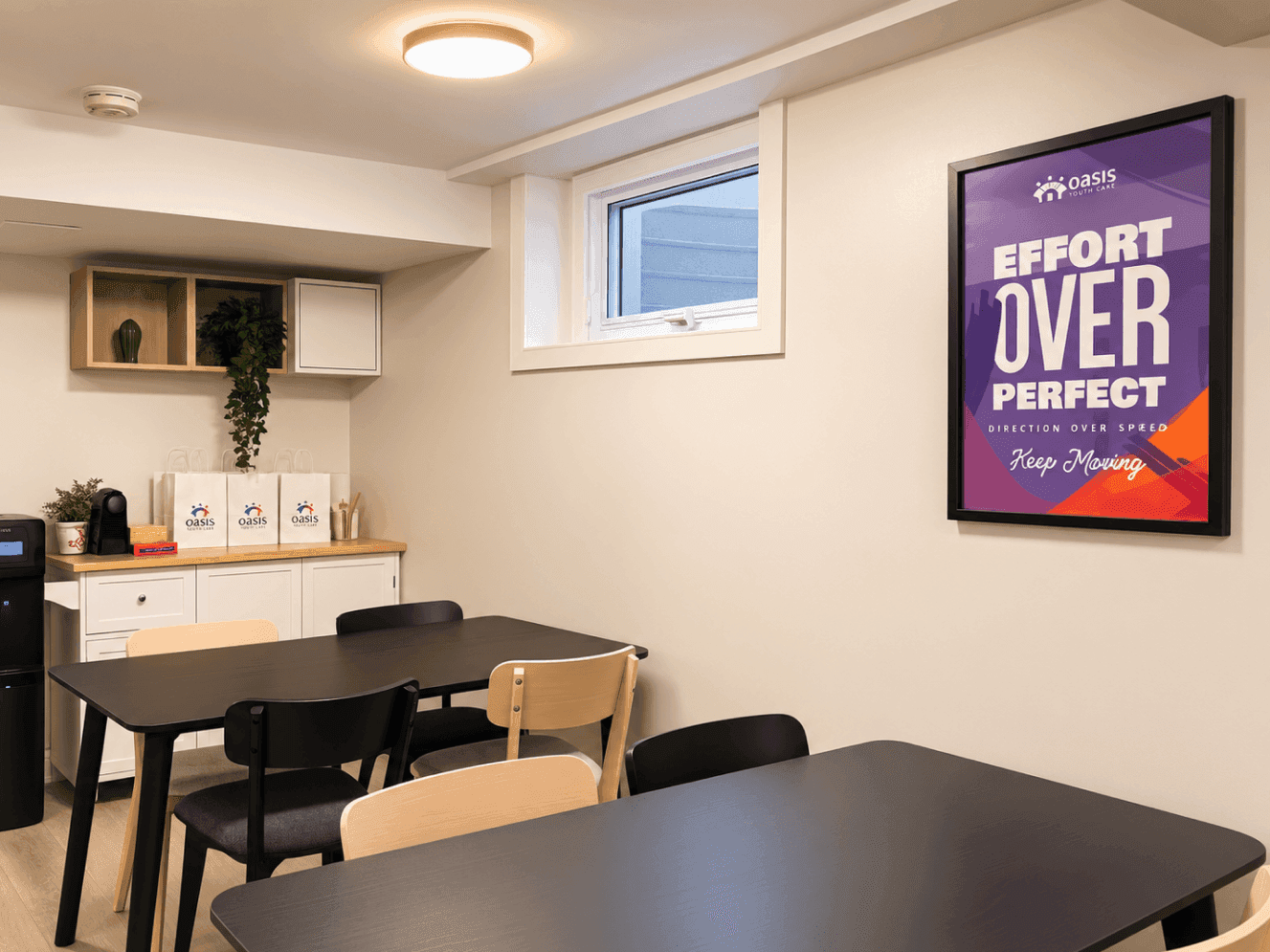
A transitional home for a young person coming out of crisis carries more weight than an ordinary interior brief. It needs to feel safe and dignified without feeling institutional. Following the Foyer Model’s three phases, the space was designed as part of the recovery pathway, moving from calmer, more private spaces in Heal to more independent, self-directed living through Grow and Thrive.
Materials and layout lean warm and residential rather than clinical: real furniture instead of institutional fittings, natural light, and private spaces that actually feel private, alongside shared spaces built for the mentorship and community connection the Ubuntu Spirit is built around. The goal is a building that can hold ten or more young people at very different points in their recovery at once, without ever making any one of them feel like a bed number instead of a person building a future.





( 00-03 )
DISCOVER MORE